Mur idéal
Surface mate, lisse, propre et sèche. Évitez les peintures satinées ou lessivables.
Guide de pose
La pose d’un papier peint adhésif se gagne avant le premier lé. Un mur propre, sec et lisse, des mesures patientes, un outil de lissage adapté et une progression lente font plus pour le résultat que la force ou la vitesse. Le rendu premium vient de la préparation et des bords.
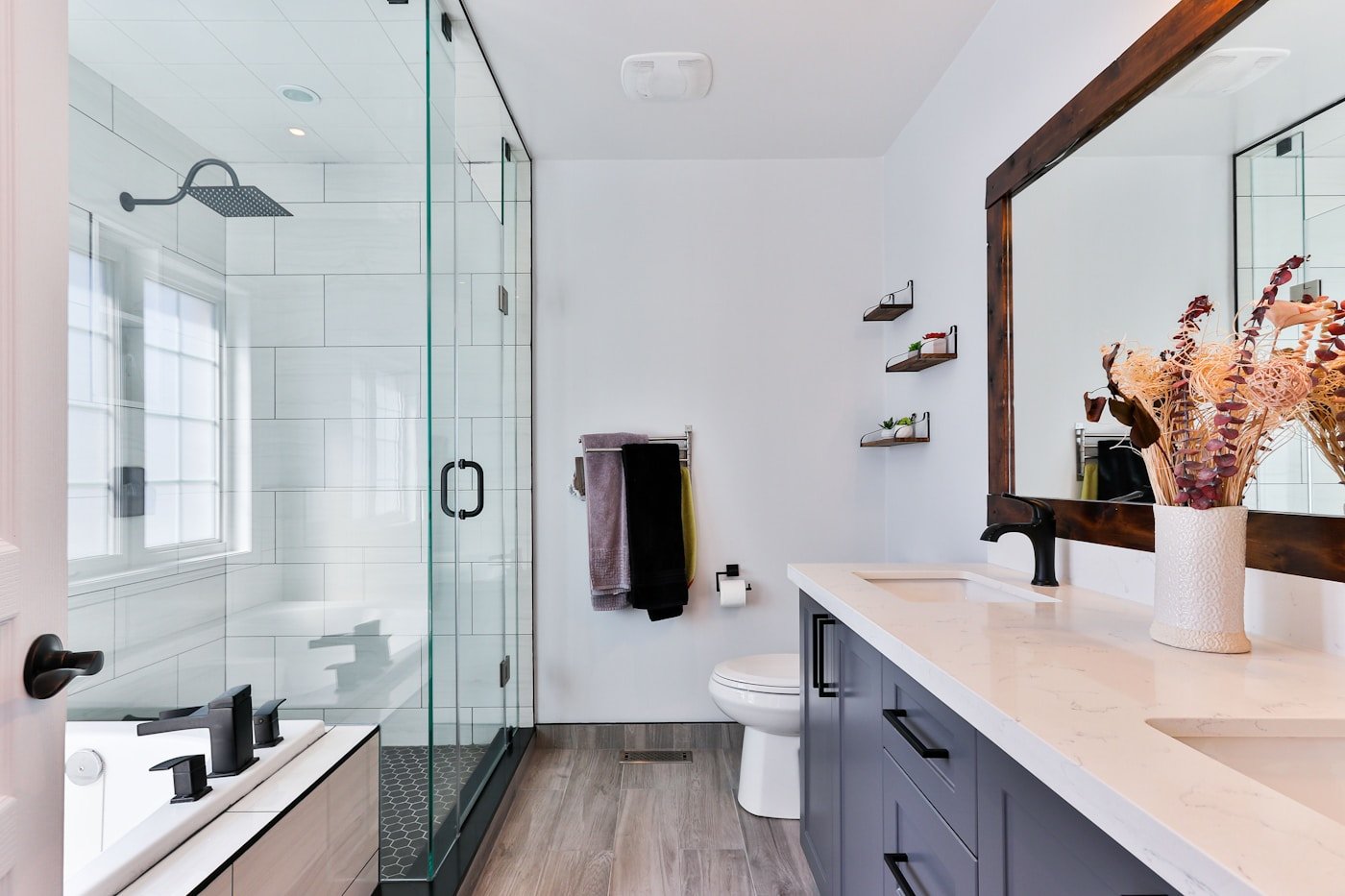
Vous cherchez le bon papier peint adhésif pour votre projet ?
Voir la sélection peel and stickPréparez le mur, mesurez deux fois, posez lentement et lissez du centre vers les bords. Ne retirez jamais tout le liner d’un coup. Les bulles viennent souvent d’un support imparfait, d’un geste trop rapide ou d’un mauvais alignement initial.
Surface mate, lisse, propre et sèche. Évitez les peintures satinées ou lessivables.
Lisseur en plastique, couteau de précision, mètre, niveau, chiffon microfibre.
Comparez les papiers peints adhésifs disponibles sur la landing peel and stick.
Un papier peint adhésif ne pardonne pas les préparations incomplètes. Contrairement à un papier peint traditionnel encollé, l’adhésif est appliqué directement sur le support, ce qui signifie que chaque impureté, aspéristé ou trace de graisse sera visible sous le film et provoquera un décollement ou une bulle.
Commencez par un nettoyage en profondeur. Utilisez une éponge humide avec un détergent doux pour retirer poussière, traces de doigts et éventuelles taches grasses. Rincez à l’eau claire et laissez sécher complètement. Un mur encore humide est une promesse de décollement futur.
Vérifiez la nature de votre peinture. Les peintures mates et plates offrent la meilleure accroche. Les peintures satinées, semi-brillantes ou dites « lavables » forment une surface trop lisse et trop ferme pour que l’adhésif s'y fixe correctement. Si votre mur est peint avec ce type de peinture, un léger ponçage au papier de verre fin (grain 180 ou 220) créera micro-aspérités et favorisera l’adhérence. Passez ensuite un chiffon sec pour éliminer les poussières.
Les murs texturés (crépi, peinture structurée) sont à proscrire sauf avec des produits spécifiquement conçus pour supports texturés. Dans le doute, faites un test sur une zone cachée de 20x20 cm et attendez 24 heures avant de juger de la tenue.
Having the right tools on hand before you start is non-negotiable. A messy or improvised setup leads to mistakes that are difficult to correct once the adhesive is exposed.
First, a plastic smoothing tool or wallpaper spatula — not a metal one, which can pierce or tear the film. A soft rubber squeegee also works well. This is your primary weapon against bubbles.
Next, a precision knife with sharp blades (a Stanley knife or similar). You'll need this to trim excess material along edges, around outlets, and at corners. Change the blade regularly; a dull blade can catch and tear the film.
Have a tape measure, a pencil, and a spirit level or laser level. Precise marking prevents crooked strips that are difficult to align and create gaps where bubbles can form.
A microfiber cloth or soft sponge for final cleaning of the wall just before application. A step stool if you're working near the ceiling. And finally, a friend — having a second pair of hands makes a significant difference when positioning large strips.
Measurement is where many people rush and later regret it. Take your time here — a few extra minutes of precision will save you wasted material and frustration later.
Start by measuring the height of your wall at multiple points (left, center, right), as ceiling heights can vary slightly in older buildings. Use the largest measurement and add 5 cm for trimming margins at top and bottom.
If your wallpaper has a pattern, calculate the repeat before cutting. Match the pattern at the top of each strip so the design flows continuously when hung. Failure to account for pattern repeat results in visible mismatches that cannot be corrected after hanging.
Mark your wall lightly with a pencil and spirit level at each strip's vertical edges. This creates a guide so each strip hangs straight. Even a 1-2mm deviation per strip accumulates into a significant slant across a full wall.
Cut all your strips in advance and lay them out in order. Spâte adhésive them neatly with the adhesive side facing up. This preparation step keeps you organized and prevents you from rushing once you start peeling and sticking.
This step is where patience truly matters. Most peel-and-stick wallpapers have a film protecteur liner that covers the adhesive. The temptation to peel it all at once is understandable but disastrous.
Peel only 10-15 cm of the liner at the top to start. Fold it back sharply so it doubles over itself — this creates a clean edge to hold. Never touch the exposed adhesive with your fingers; the oils from your skin reduce pâte adhésiveiness.
Some installers find it helpful to use the edge of a credit card or the smoothing tool to push the liner down incrementally, keeping the adhesive exposed area controlled and small.
If the liner is静电叉 ou adheres to itself due to humidity, work in a dry environment. Peel slowly and steadily; a jerky motion can cause the film to stretch or fold on itself, creating permanent wrinkles.
The first strip sets the tone for the entire installation. If it is crooked, every subsequent strip will compound the error. Use your pencil guides and take a breath before committing.
Position the top 10 cm of exposed adhesive at the top of your marked line. Hold the strip gently against the wall without pressing yet — this lets you verify alignment before activating the adhesive.
Once alignment is confirmed, apply light pressure to the top edge to pâte adhésive it in place. Work your way down slowly, peeling more liner as you go and smoothing as you progress. Do not peel the entire liner at once — this makes the film hard to control and nearly impossible to reposition.
For the first strip, consider leaving a 2-3 cm margin at the ceiling and floor. You can trim this excess after the strip is fully adhered, using your precision knife and a straightedge. Trimming after application produces cleaner cuts than pre-cutting.
This is the heart of bubble-free application. The principle is simple: push air outward from the center, not toward the center. Any air trapped under the film creates a bubble, and bubbles only get worse over time as the adhesive fully cures.
Hold the smoothing tool at a 30-45 degree angle to the wall. Apply firm, even pressure and sweep from the center of the strip toward the edges in a V or fan motion. Do not press straight down or in circular motions — these tend to push air to the sides rather than out.
Work top to bottom, exposing only small sections of adhesive at a time. As you peel the liner down 20-30 cm, stop and smooth that section before continuing. This incremental approach keeps the film flat and manageable.
Pay special attention to corners and edges, which are the most common failure points. Press firmly along all edges with the flat side of the smoothing tool to ensure maximum contact with the wall.
Even when individual strips are perfectly applied, poor edge management can ruin the final look. Edges that are not fully pressed down will catch on clothing, cleaning tools, or simply lift over time due to humidity.
When two strips meet, slightly overlap them (2-3 mm) rather than trying to butt them edge-to-edge. This overlap guarantees no gaps, which are far more noticeable than a hairline overlap. After both strips are in place, run your smoothing tool firmly along the junction.
At corners, wrap the film around the corner by at least 2-3 cm onto the adjacent wall. Continuing directly around a corner without this wrap almost guarantees peeling within weeks. Cut a small notch in the film at the corner point to prevent bunching.
Once all strips are up, go over every edge with firm pressure one final time. A seam roller tool can be useful here for压实 edges without damaging the film surface.
Even with perfect technique, a bubble may appear. The good news: most bubbles can be fixed if caught early, before the adhesive fully sets.
If you see a small bubble while the adhesive is still fresh, prick it with a fine needle or pin, then press the area firmly with your smoothing tool. The tiny hole allows air to escape and the adhesive to flatten.
For a larger bubble that formed early in the process, carefully lift the film to the nearest edge, peel it back to the bubble, and re-smooth from that point. This is only possible in the first 15-20 minutes. Once the adhesive has begun to cure, lifting will likely abîme the film or leave an adhesive residue.
If a bubble has dried and cured, the options are limited. A small bubble can sometimes be flattened by applying heat with a hair dryer on low heat while pressing firmly — the warmth softens the adhesive slightly, allowing it to reflow. A large, stubborn bubble that refuses to flatten may need to be addressed with a tiny dot of permanent craft adhesive injected via syringe.
L'application est une chose ; la tenue à long terme en est une autre. Le papier peint adhésif atteint sa force d’adhérence maximale après 24 à 72 heures selon la température et l’humidité de la pièce.
Pendant les 48 premières heures, évitez d’exposer le mur à l’humidité (douche chaude dans une salle de bain attenante, cuisson vapeur intensive, nettoyage humide du mur). L'eau peut s'infiltrer sous les bords non pressés et provoquer un décollement.
Dans une pièce humide comme une salle de bain, privilégiez un papier peint adhésif spécifiquement évalué pour cet environnement. Même dans ce cas, évitez une pose directe dans la zone de douches non protégées.
La durabilité dépend de la qualité du support et de la préparation initiale. Un mur bien préparé peut retenir son adhésif plusieurs années. Un mur mal préparé commencera à se décoller aux coins dès les premières semaines.
Pour une tenue prolongée, vérifiez régulièrement les bords et les jonctions. Un simple coup de main ferme sur les bords tous les quelques mois peut prévenir un décollement progressif.
Oui. Le mur doit être propre, sec, lisse et sans poussière. La préparation conditionne l’adhérence et limite les bulles.
Percez très légèrement les petites bulles avec une aiguille fine puis lissez doucement. Pour les grosses bulles, il faut parfois décoller localement et reposer.
Non. Les murs humides, poussiéreux, texturés, très poreux ou fraîchement peints peuvent poser problème.
Oui selon les produits, mais il faut le faire rapidement et doucement. Plus vous repositionnez, plus l’adhérence peut être fragilisée.
Une raclette souple, un chiffon propre ou un outil de marouflage adapté. Évitez les objets durs qui rayent ou marquent la surface.
Prêt à choisir votre papier peint adhésif ?
Voir les modèles peel and stick